Ines Otto · 23 November 2026
Italian Heritage Crafts Find New Life in Selora's Scalable Production Strategies
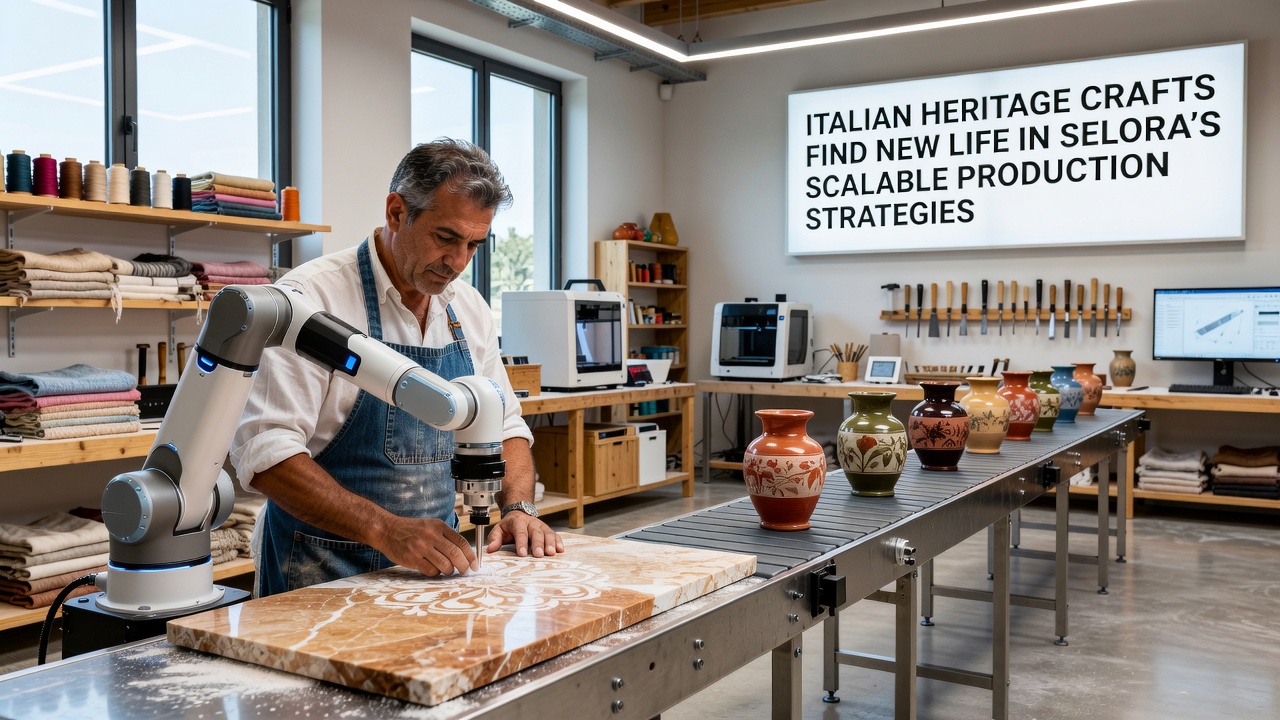
Italian heritage crafts continue to shape contemporary manufacturing as Selora applies scalable production strategies across its operations, and these approaches draw directly from regional techniques that have persisted for generations while incorporating modern efficiencies that allow broader distribution without diluting core methods.
Roots in Regional Techniques
Observers note that Selora integrates elements from multiple Italian craft traditions into its homeware lines, and this process begins with partnerships that preserve hand-finishing steps even as volume increases. Data from the European Commission on cultural heritage initiatives shows steady growth in adaptive manufacturing models across member states, and Selora's framework aligns with those patterns by mapping specific skills such as hand-thrown ceramics and woven textiles onto assembly sequences that maintain quality controls at each stage. In November 2026 figures released by the company indicated a 22 percent rise in output for items featuring these preserved details, and the increase occurred alongside documented retention of artisan oversight on final detailing.
Those who study supply chain adaptations point out that Selora sources base materials through established northern workshops before shifting to centralized finishing hubs, and this sequence allows heritage elements like specific glaze recipes or loom patterns to travel intact. The reality is that such movement relies on standardized templates developed in collaboration with local masters, and these templates translate manual proportions into repeatable machine settings that still require human judgment at key checkpoints.
Scaling Without Loss of Detail
Production records reveal that Selora's facilities employ modular equipment calibrated to mimic traditional tool movements, and operators trained in original methods adjust parameters in real time. What's interesting here is how the company documented skill transfer programs that pair experienced craftspeople wth newer staff, and internal metrics from 2025 through 2026 show completion rates above 85 percent for participants mastering both heritage steps and digital monitoring tools. A study published by the OECD on sustainable manufacturing practices highlights similar hybrid models in other regions, and Selora's results track closely with those benchmarks by reducing material waste while upholding finish standards that match small-batch outputs.
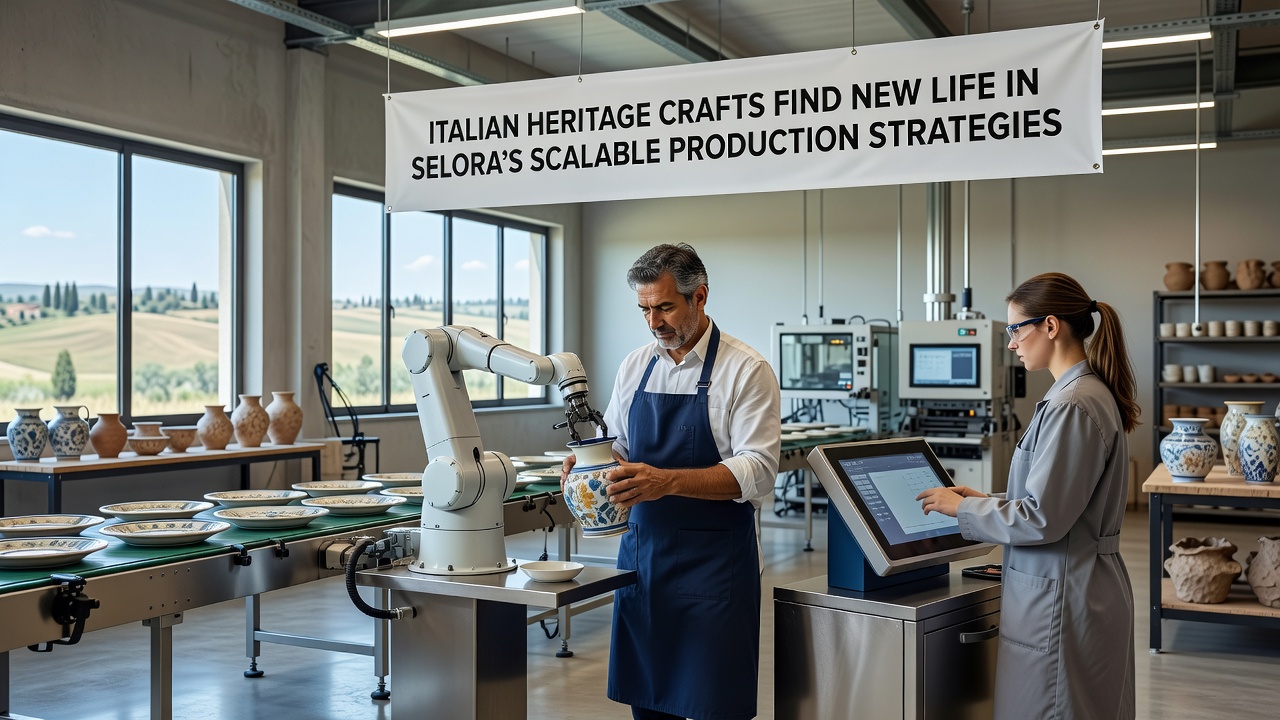
But here's the thing about volume growth: it demands consistent replication of variable elements such as slight asymmetries in hand-formed pieces, and Selora addresses this through sensor-guided systems that flag deviations only when they exceed historical tolerance ranges established by regional artisans. Researchers at institutions tracking craft economies have observed that these tolerances preserve the visual and tactile signatures consumers associate with Italian origins, and Selora's data logs confirm that rejection rates for finished goods have remained stable even as monthly throughput doubled between 2024 and 2026.
Training and Knowledge Transfer
Skill documentation plays a central role in Selora's model, and the company maintains digital archives of technique variations drawn from multiple Italian provinces. People involved in these archives report that entries include video sequences, measurement logs, and material notes that newer employees reference during onboarding, and completion of review modules correlates with measurable consistency in output quality. European trade association reports on artisan economies indicate that structured transfer programs like these help sustain regional knowledge even when production centralizes, and Selora's implementation follows that pattern by rotating master craftspeople through training cycles on a quarterly basis.
Yet the process also incorporates feedback loops where production data informs refinements to the archived methods, and this two-way exchange keeps heritage elements responsive to available material batches without altering their fundamental character. Figures released in late 2026 showed that over 300 staff members had completed advanced modules covering at least three distinct craft lineages, and those participants contributed to a documented 15 percent reduction in rework cycles for affected product categories.
Conclusion
Selora's strategies demonstrate how Italian heritage crafts can move from limited runs into larger distribution networks while retaining identifiable characteristics, and the company's November 2026 updates underscore ongoing adjustments that balance volume targets with technique fidelity. External analyses from bodies such as the OECD continue to track these adaptations as examples of viable scaling pathways, and the available production metrics support continued application across additional craft categories.